Project
AUDIO DSP PROCESSOR
Technology
ADAU1701, TPA3116D2, ESP32, SigmaStudio, EasyEDA
Topics
DSP, Audio Engineering, PCB Design, Signal Processing
Designed and built a custom Digital Signal Processor (DSP) for advanced audio processing, enabling real-time frequency response adjustments for high-fidelity speaker systems. This project combined hardware design, signal processing, and embedded systems to create a versatile audio solution.
The Challenge
- Needed precise control over speaker channel levels in real-time
- Wanted to eliminate compromises of off-the-shelf amplifier solutions
- Sought to integrate modern control interfaces (WiFi/Bluetooth)
- Required customizable sound profiles for different audio content
Technical Implementation
- Core DSP: ADAU1701 with 28-/56-bit audio processing
- Microcontroller: ESP32 for system control and wireless connectivity
- Amplification: Custom 50W + 50W TPA3116D2-based amplifier
- Software: SigmaStudio for DSP programming and simulation
- Manufacturing: PCB design in EasyEDA, fabricated by JLCPCB
Key Features
-
Advanced Signal Processing:
- 6th order high-pass and low-pass filters for each frequency band
- Cascaded second-order filters for precise frequency control
- Customizable crossover points and gain staging
-
Modern Connectivity:
- I²C interface for external control
- WiFi/Bluetooth capabilities (partially implemented)
- USB-C power delivery
-
User Interface:
- Real-time parameter adjustment
- Visual feedback through LED indicators
- Persistent configuration storage via EEPROM
Development Process
-
Research Phase:
- Studied DSP fundamentals and filter theory
- Evaluated different DSP chips and their capabilities
- Designed system architecture and signal flow
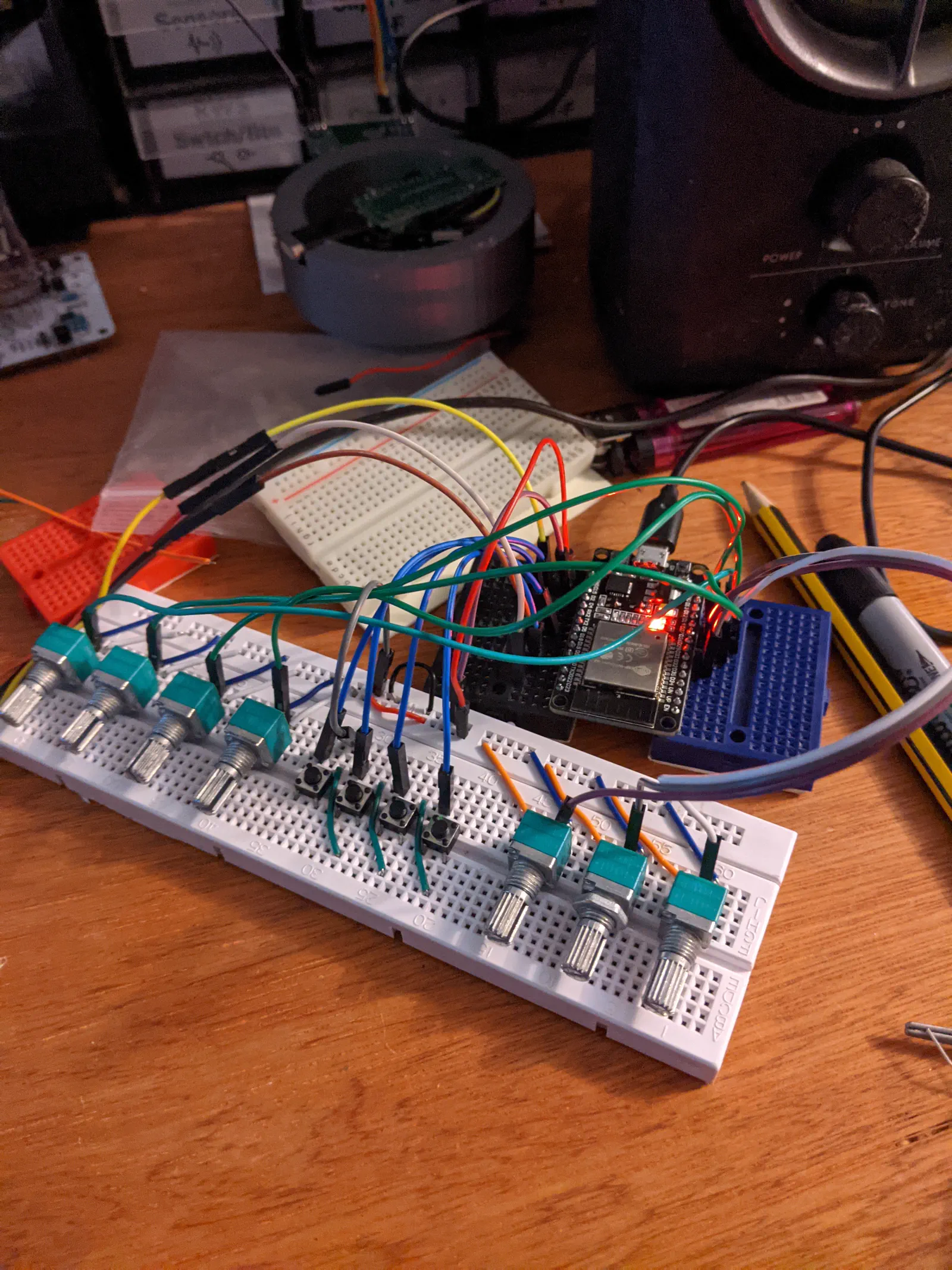 Early breadboard prototype to test
core DSP functionality
-
Hardware Design:
- Created schematics for the DSP and amplifier circuits
- Implemented supporting circuitry including power regulation and I/O
- Designed for manufacturability and ease of assembly
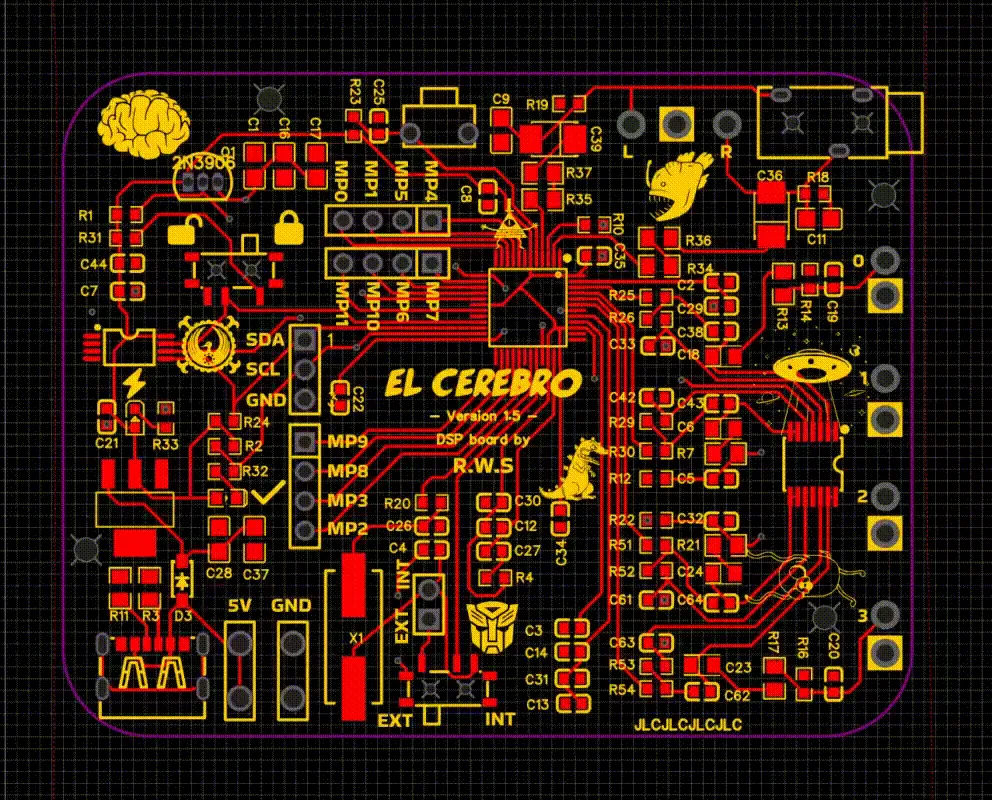 Interactive circuit
schematic showing signal flow and component interactions
-
Software Development:
- Programmed the DSP using SigmaStudio
- Developed filter algorithms and audio processing chains
- Created control interface for parameter adjustment
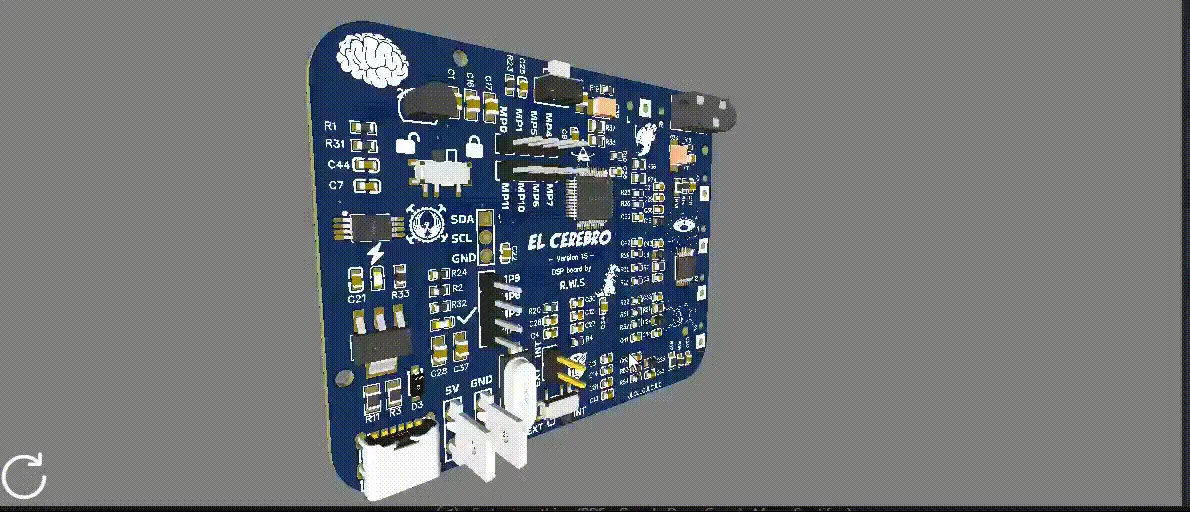 Real-time visualization of the DSP
processing pipeline
-
Testing & Iteration:
- Prototyped and tested individual circuit blocks
- Validated audio quality and processing capabilities
- Refined the design based on testing results
Results & Impact
- Successfully implemented a fully functional DSP system
- Achieved precise control over audio frequency response
- Created a foundation for future audio projects
- Demonstrated the ability to design complex mixed-signal systems
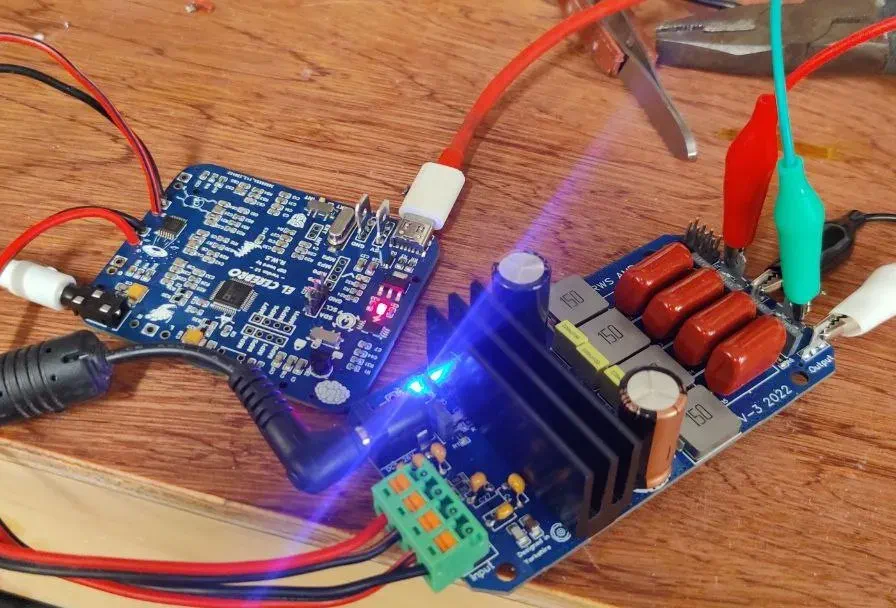 Final DSP board integrated with the
custom amplifier module
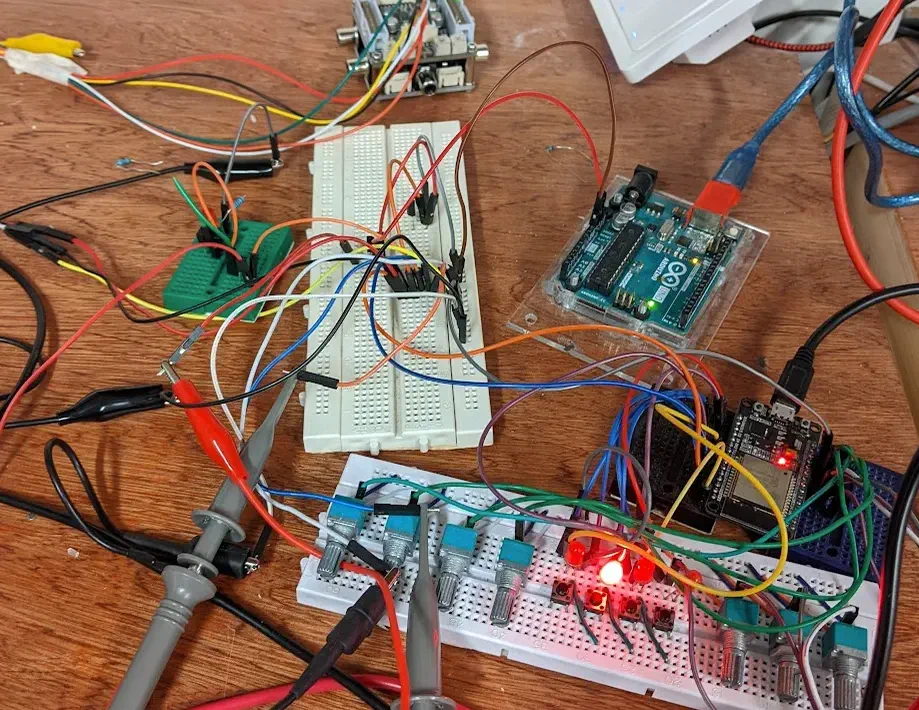 Prototype wiring during testing phase
Lessons Learned
- The importance of thorough testing at each development stage
- Challenges of mixed-signal PCB design and layout
- Value of simulation in DSP development
- Trade-offs between performance, cost, and complexity
Future Improvements
- Complete Bluetooth audio implementation
- Develop a mobile app for wireless configuration
- Add real-time audio visualization
- Improve physical design with better mounting and connectors
- Implement automatic room correction features
This project represents a significant milestone in my journey through audio electronics and signal processing, showcasing the ability to take a complex concept from initial research through to a functional, real-world implementation.